Hovedøya Island: Ferry, Monastery Ruins, and Day Trip Guide
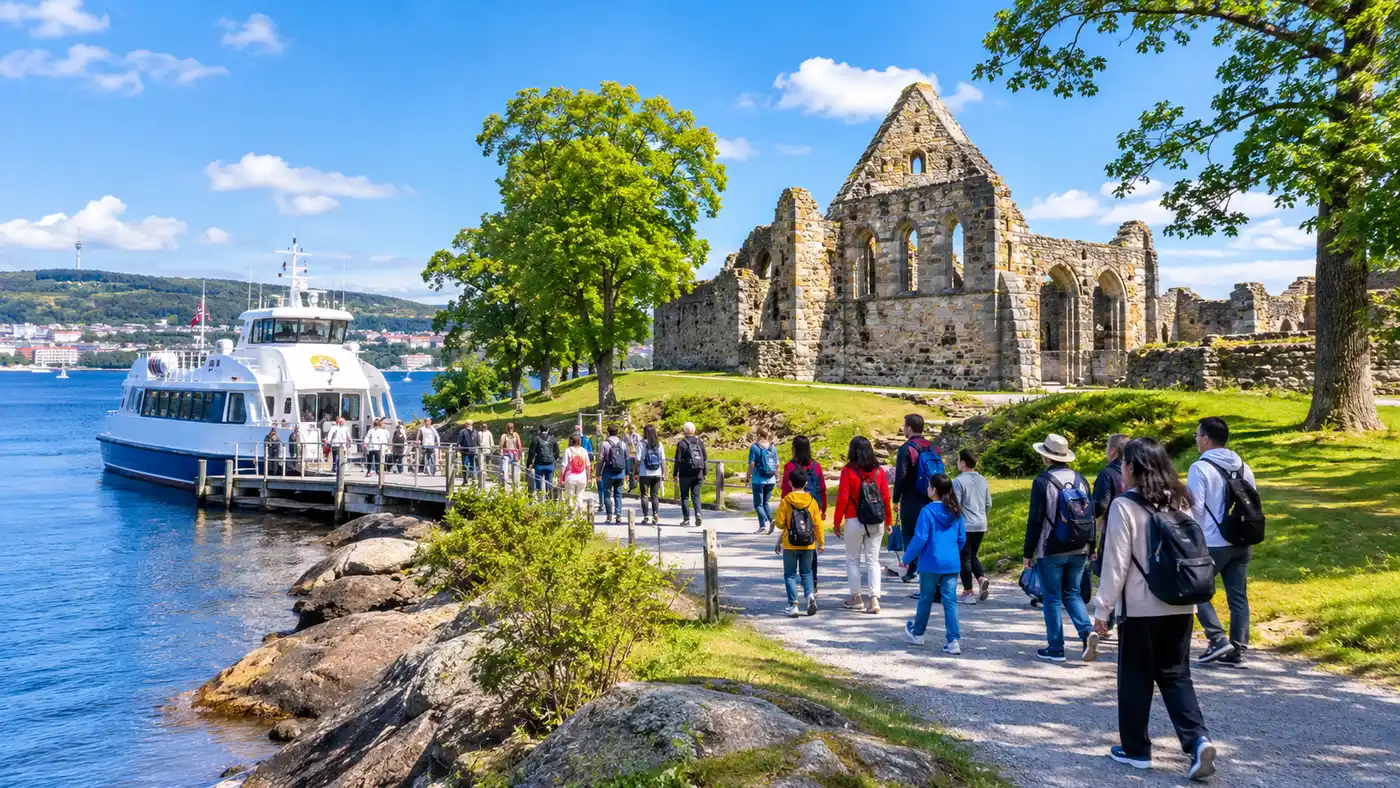
You can see the green lump of the island right from the stone harbor steps behind Oslo City Hall. On a warm Tuesday in late June, the water in the harbor looks almost black against the pale hull of the electric ferry, and the whole city seems to be carrying canvas tote bags stuffed with bath towels, strawberries, and bottles of water. Taking the boat over to hovedøya takes roughly eight minutes, which feels almost absurd when you realize how completely the landscape changes the second your sneakers hit the wooden pier. Oslo’s glassy skyline and construction cranes are still visible across the bay, but suddenly you are standing under dense canopies of ash, elm, and ancient linden trees.
Most travelers land in Norway obsessed with getting west toward the steep fjords or heading north above the Arctic Circle. That is fine, but it means they often miss how special the Oslofjord is on an ordinary sunny morning. Hovedøya is the closest and most versatile of the city islands. It mixes twelfth-century English monastic history, nineteenth-century coastal artillery batteries, protected nature reserves, and two curved swimming coves that fill up with picnicking locals the minute the temperature creeps past 21 degrees Celsius. If you have an afternoon to spare between museums in downtown Oslo, this little island is the easiest escape you will find.
Book your oslo island hopping experience:
Catching the Hovedøya Island Ferry from the City
Getting to the island could not be simpler. The hovedoya island ferry departs from Rådhusbrygge 4, the pier directly in front of the brick towers of Oslo City Hall. You do not need a special tour ticket or an expensive harbor cruise reservation. The boats are part of the standard Ruter public transit network, which means if you already have a 24-hour pass, a 7-day transit card, or an active single ticket on the Ruter mobile app, your trip is already paid for. A standard single zone 1 ticket costs around 42 kroner, which is probably the cheapest scenic boat ride in northern Europe.
The main line running here is the B1 ferry, which runs in a continuous loop connecting the city center to Hovedøya, Bleikøya, Gressholmen, and the two Lindøya stops. In peak summer months from late May through August, departures run every 20 minutes from early morning until late evening. In spring and autumn, boats drop down to once an hour, and in deep winter the schedule shrinks considerably. If you plan to hop across to other spots, checking our detailed Oslo island ferry guide will save you from standing on an empty dock watching the sun go down.
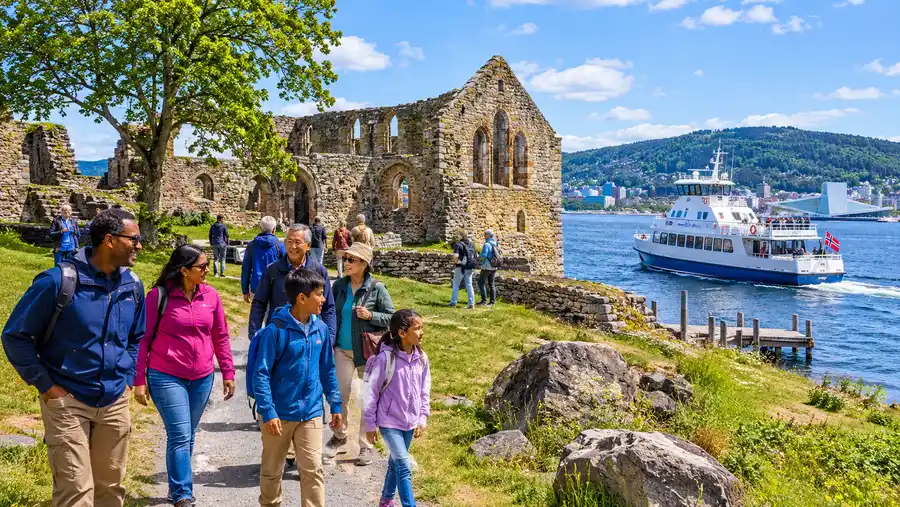
Boarding is quick. You tap your physical transit card on the reader at the gangway gate, or you simply walk on board if your ticket is active on your phone. Seating is divided between an enclosed, heated cabin below and an open-air upper deck with wooden benches. Honestly, unless the rain is blowing sideways, stay on top. The ferry swings gently past the stone ramparts of Akershus Fortress, cuts through the wake of giant cruise liners, and docks at Hovedøya before you even finish looking through your photos of the harbor.
| Ferry Route | Main Stops | Summer Frequency | Journey Time to First Stop |
|---|---|---|---|
| Line B1 | Rådhusbrygge 4, Hovedøya, Bleikøya, Gressholmen, Lindøya | Every 20 minutes | 8 minutes |
| Line B2 | Rådhusbrygge 4, Hovedøya, Gressholmen, Langøyene | Every 30 minutes | 8 minutes |
| Line B9 (Seasonal) | Rådhusbrygge 4, Dronningen, Bygdøy, Hovedøya | Selected weekends | 12 minutes |
When the boat eases into the slip at Hovedøya, there are no cars waiting. The entire island is completely pedestrianized, apart from a small tractor used by the park authorities. You step off the ramp straight onto a crushed gravel path flanked by tall lilac bushes and old cast-iron signs pointing toward the ruins and the bathing beaches.
Walking Through Medieval Ruins and Monastic Ghosts
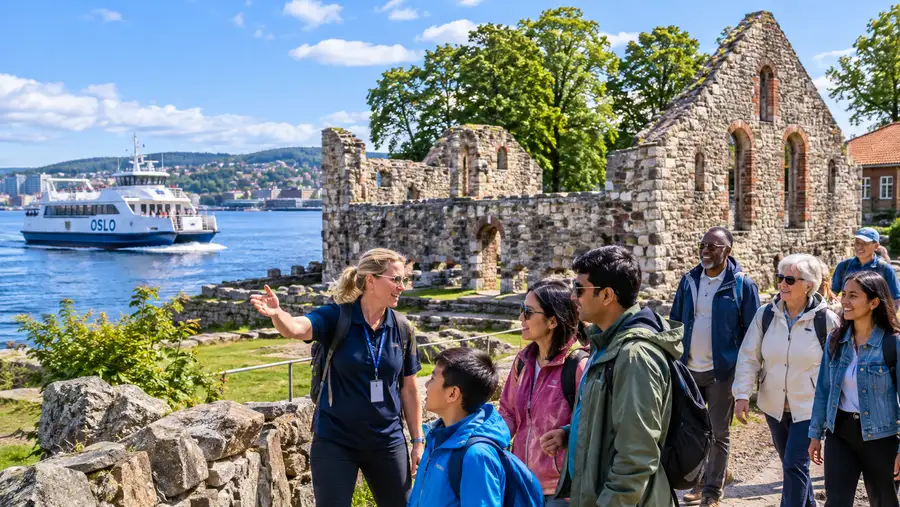
Follow the path slightly uphill to the west, and within three minutes you will reach the low limestone walls of Hovedøya Abbey. The monastery was founded in May 1147 by English Cistercian monks who sailed over from Kirkstead Abbey in Lincolnshire at the invitation of the Bishop of Oslo. They brought with them specialized stone-carving skills, agricultural knowledge, and medicinal garden herbs that still sprout wild along the forest edges today.
The ruins are roofless now, but the ground plan remains remarkably intact. You can walk through the central nave of the church, cross into the cloister square, and touch the cool, rough stones of the chapter house. Unlike many heavily curated historical sites across Europe, there are no velvet ropes here. You can step directly over the stone thresholds where medieval monks washed their hands before entering the refectory. The acoustics in the choir corner are surprisingly good, and occasionally you will hear amateur choir singers testing the stone arches with a hymn.
Note: Hovedøya is home to fragile limestone flora found almost nowhere else in Scandinavia. Do not pick flowers or dig up wild herbs around the monastery grounds, as several plant species here are strictly protected under Norwegian law.
The monastery met a violent end in 1532. The abbot got tangled up in a political power struggle involving the exiled King Christian II of Denmark and Norway. A Danish nobleman named Mogens Gyldenstjerne sailed out to the island, arrested the monks, stripped the copper from the roofs, and burned the buildings to the ground. Decades later, the charred limestone blocks were salvaged by Danish kings to reinforce the walls of Akershus Fortress across the water. Looking at the crumbling foundations under the soft afternoon light, it is strange to imagine that violent clash taking place in such a quiet clearing.
Just past the northern wall of the abbey sits a small, red-painted timber house that serves as an informal gallery and seasonal cafe during sunny summer weekends. It serves coffee, warm waffles dusted with cardamom, and cold cans of sparkling mineral water. Tables and folding chairs are scattered across the grass under aged apple trees, making it a peaceful spot to rest your feet before heading toward the southern shore.
Beaches, Bays, and Swimming Spots
If you cross through the center of the island along the main gravel track, you will arrive at the southern bay in roughly ten minutes. The landscape opens up into wide grassy lawns bordered by pine stands, revealing two curving pebble-and-sand beaches separated by a high rock outcrop. On hot July afternoons, this area acts like a collective living room for southern Oslo.
The water in the inner Oslofjord is clean and brackish, meaning it has much lower salinity than the open North Sea. It generally hovers around 18 to 20 degrees Celsius in July and August. The main beach slopes down very gently, which makes it safe and accessible for small children wading in the shallows. If you follow the footpaths up onto the smooth granite rocks to the east, you will find deeper water where adults dive directly off the stone ledges into five meters of green water. It ranks high among the best beaches in Oslo because it combines sheltered water with sweeping views out toward the forested hills of Nesodden.
Pro tip: Bring a pair of inexpensive water shoes. The rocky swimming ledges on the southeastern point are covered in small blue mussels and barnacles, which can slice your toes open if you climb out of the water in bare feet.
Facilities at the beach are simple but clean. There is a wooden bathhouse with running water and public composting toilets, along with fresh water taps where you can rinse the salt from your face and refill your canteen. Do not expect loungers, cocktail bars, or umbrella rentals. Norwegian island culture is self-sufficient. People carry lightweight picnic blankets, bags of sweet cherries from the grocery stores in town, and portable speaker boxes played at respectable volumes.
For those who prefer total seclusion, walk around the western coastline along the dirt tracks. The shoreline there is steeper and covered in tangled birch and juniper, but tiny pocket beaches appear between the cliff faces. You can usually find a quiet flat boulder big enough for two people, where you can read without hearing anything besides the rhythmic slap of small waves and the distant hum of passing sailboats.
Book your oslo island hopping experience:
Cannons, Forests, and What to Pack
Beyond its monastic roots, hovedoya island norway served as a military fortress for centuries. After the monastery was destroyed, the island became a quarantine station and later a coastal defense hub during the Napoleonic wars. As you wander along the southern ridges, you will stumble upon two large nineteenth-century artillery batteries. Massive cast-iron cannons still sit mounted on circular iron rails, pointing silently down the main fjord channel toward Denmark.
The contrast between the black military artillery and the soft wild roses blooming around the timber gun mounts feels surreal. During the summer, a small flock of sheep is brought out to graze on the steep grassy ramparts to keep the invasive brush from taking over the archaeological earthworks. They wander through the trees without minding the visitors, occasionally stopping near the hiking trails to chew on sweet meadow grass.
Because there are no general grocery stores or convenience shops on the island, preparing before you step on the ferry is sensible. You can easily buy everything you need at the Kiwi or Rema 1000 supermarkets near Oslo Central Station or Aker Brygge.
- Drinking water: bring at least 1.5 liters per person, especially if hiking the forest loops in midsummer.
- Sturdy footwear: light trail shoes or sneakers are far better than flip-flops on the uneven gravel and limestone paths.
- Warm layer: the open ferry ride can feel surprisingly chilly even in July once the sea breeze picks up.
- Sun protection: tree cover disappears on the coastal rocks and artillery hills, leaving you exposed for hours.
- Litter bag: there are trash bins near the ferry pier, but you must pack out your rubbish from the beaches.
Bicycles are technically allowed onto the ferry, but honestly, riding a bike here is frustrating. Most paths have steps, kissing gates, or steep stony sections intended strictly for walkers. You are much better off leaving your city bike locked at the bike racks on Rådhusbrygge before boarding.
Island Hopping: Connecting to Lindøya and Beyond
One of the best ways to spend a sunny Saturday is to treat Hovedøya as the first stop on a longer island loop. Since the B1 boat operates on a circular route, you can get back on the ferry using the exact same transit ticket, provided your trip falls within the standard 60-minute single ticket window or you carry a daily pass. Heading west from Hovedøya takes you straight to Bleikøya and then onto lindoya island, which has an entirely different character.
While Hovedøya feels wild, ancient, and historical, Lindøya is packed with roughly 300 charming, painted summer cottages. These cabins were built in the 1920s by working-class families from eastern Oslo who wanted a sunny escape from cramped city apartments. The tiny houses are painted bright Falun red, ochre yellow, and deep forest green, strictly regulated by community bylaws. Walking along Lindøya’s narrow paths between miniature gardens bursting with peonies feels like stepping into an idyllic mid-century storybook.
- Option 1: The Quick Nature Circuit: spend two hours exploring Hovedøya's monastery and artillery hills, then take the ferry directly back to City Hall for lunch.
- Option 2: The Swim and Cottages Combo: swim at Hovedøya’s southern cove in the morning, board the B1 ferry to Lindøya Øst, wander through the historic cabin lanes, and grab an ice cream at Lindøya’s tiny harbor store.
- Option 3: The Full Fjord Hop: start at Hovedøya for ruins, transfer to Gressholmen for lunch at the historic inn, and finish at Langøyene for a long swim on the wide sandy beach.
If you choose to make a day of it, pay close attention to the destination sign on the front of each approaching boat. Some boats run clockwise loops and others run counter-clockwise depending on the time of day and schedule variation. The ferry staff on the gangway are friendly and speak fluent English; asking "Does this boat stop at Lindøya?" takes two seconds and prevents you from heading straight back to the mainland prematurely.
Frequently Asked Questions about hovedøya
Can you camp overnight on Hovedøya?
No, overnight camping and pitching tents are strictly prohibited on Hovedøya to protect the delicate flora and historical structures. If you want to camp on an island in the Oslofjord, you must take the ferry to Langøyene, where tent camping is legal and free in designated grassy areas.
Are there places to buy food on Hovedøya?
There is a seasonal summer cafe located near the monastery ruins, called Klosterkroa, which serves light lunch items, coffee, waffles, and ice cream on sunny weekends. However, operating hours depend heavily on the weather, so bringing your own picnic food and snacks from the mainland is always a safer plan.
How long does it take to walk around Hovedøya?
The island covers roughly 0.5 square kilometers. Walking the entire perimeter trail at a casual pace takes about 45 to 60 minutes. If you want to explore the monastery ruins thoroughly, inspect the old military cannons, and sit down for a quick picnic lunch, plan to spend two to three hours on the island.
Is Hovedøya accessible for wheelchairs and strollers?
The ferry itself is fully accessible, and the main crushed-stone road running from the dock past the monastery ruins down to the main bathhouse is manageable with a rugged stroller or an electric wheelchair. However, the side trails leading to the coastal viewpoints, cannon batteries, and rocky beaches are steep, bumpy, and full of exposed tree roots.
Quick Reference
- Ferry crossing: 8 minutes from Rådhusbrygge 4 (Line B1)
- Transit cost: Standard Zone 1 Ruter fare (approx 42 NOK)
- Key highlights: 12th-century Cistercian ruins, swim beaches, 1808 cannons
- Overnight stays: Camping strictly forbidden
Book your oslo island hopping experience:
My Take
Whenever someone visits me in Oslo and asks where to go on their first afternoon, I always send them down to Rådhusbrygge to catch the island ferry. It costs no more than an ordinary subway ride, yet within ten minutes you are walking through damp monastery walls that predate the black plague, smelling pine needles warmed by the sun, and watching sailboats tack across the fjord. Pick up a loaf of sourdough, a tub of butter, and a carton of berries at the supermarket before you board. Find a flat granite ledge facing south toward the open water, unpack your lunch, and you will understand why locals guard their summer daylight so fiercely.
Read more about oslo island hopping.