Gressholmen Kro: History, Menu, and Island Dining Guide
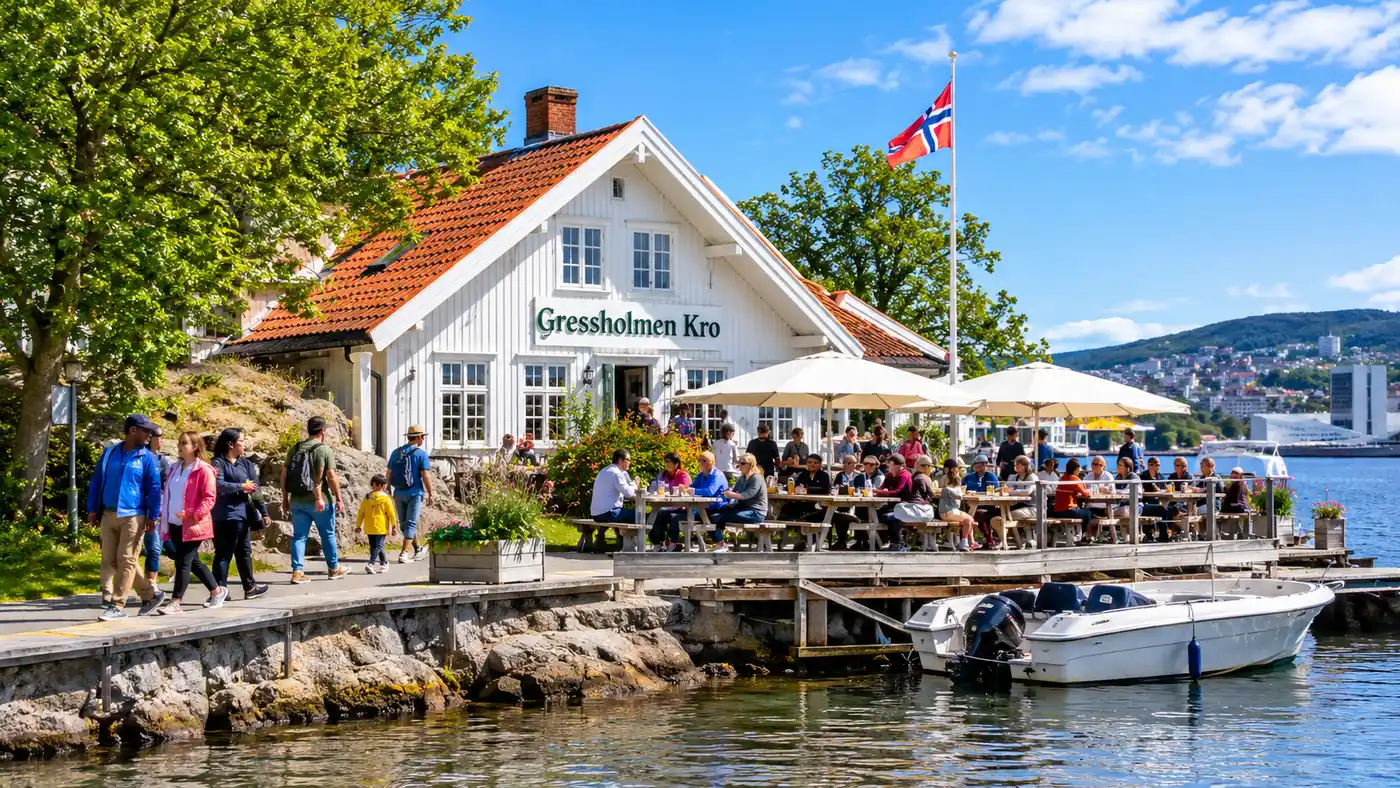
You can smell the salt water and wild chives before the boat even touches the wooden slipway. It takes roughly 15 minutes to ride the public ferry from the concrete blast of Aker Brygge out into the harbor, but stepping onto the gravel path outside gressholmen kro feels like skipping back seventy years. There are no cars here. No traffic hum, no neon signs, just thick lilac bushes in June, weathered wooden benches, and the clinking of pilsner glasses under the canopy of old deciduous trees.
For locals, this spot is an institution. For visitors, it is usually an accidental discovery made while wandering past the old seaplane hangars on a sunny afternoon. Whether you are coming for a full shellfish lunch or just a cold glass of cider after a swim in the cove, knowing how the kitchen operates and when to turn up makes all the difference between a frustrating wait and the best afternoon of your summer.
Book your oslo island hopping experience:
From Seaplane Terminal to Beloved Summer Inn
The building itself dates back to 1930. Back then, Gressholmen was not a quiet nature reserve where city people went to pick berries and sunbathe on smooth granite slabs. It was Norway's main civil airport. Giant Dornier Wal and Junkers flying boats touched down out on the water, taxied up the concrete ramps, and tied off right where the sailboats now bob at anchor. The restaurant opened its doors to cater to adventurous flight passengers, mechanics with grease under their nails, and coastal pilots who needed a warm meal between storm systems.
When the airport moved out to Fornebu in 1939, most of the aviation infrastructure fell into quiet disrepair, but the inn survived. It went through decades of changing hands. Sometimes it sat shuttered for years, leaving locals to peer through dusty windowpanes, mourning the loss of their favorite harbor hideaway. The city eventually stepped in, realizing that letting such a historic meeting place rot into the moss would be a cultural crime.
A massive restoration wrapped up around 2017, bringing the timber frame back to life while outfitting the kitchen with modern equipment. Today, the space honors that aviation heritage without turning into a sterile museum. Black and white photographs of flying boats hang on the dark timber walls inside, and the original architectural proportions remain untouched. If you plan a wider day around visiting Gressholmen Island, starting with the history of these runways gives the whole landscape a haunting, cinematic weight.
There is also the rabbit lore. For decades, Gressholmen was overrun by thousands of feral pet rabbits whose ancestors were released here in the mid-twentieth century. They chewed the island down to the bedrock, gave the island a surreal fairytale atmosphere, and eventually had to be removed to protect the fragile coastal flora. Longtime patrons still talk about sipping aquavit on the terrace while dozens of brown bunnies darted between the tables.
The Atmosphere at This Classic Gressholmen Restaurant
The vibe shifts depending on the hour and the wind direction. At noon on a Tuesday, you might find three retired sailors drinking filter coffee beside young parents spreading blankets on the lawn. By six on a warm Friday evening, the courtyard morphs into a lively, sun-drenched festival of seafood platters and natural wine, with people squeezing together on long wooden tables as the fjord breeze picks up.
The interior dining room feels like a cozy maritime lodge. Dark-stained wood, low ceilings, and simple candle holders make it a shelter on those unpredictable Oslo days when an afternoon downpour suddenly blows in over the hills of Nesodden. When the sun shines, though, nobody sits inside. The gravel garden holds dozens of heavy picnic benches, shaded in parts by leafy trees and completely exposed in others for those who chase every ray of Nordic sunshine.
Pro tip: Grab a seat on the eastern edge of the garden if you want shelter from the late afternoon southwesterly breeze, which can turn a warm lunch chilly in about ten minutes.
Service here is delightfully informal. You are out on an island, and the staff operate with a calm, unhurried cadence that forces you to match their tempo. You order at the counter inside, take your drinks outside right away, and wait for the kitchen to bring your food out to the garden. It is not white-glove dining, nor should it be. It is honest island hospitality.
Breaking Down the Gressholmen Kro Meny
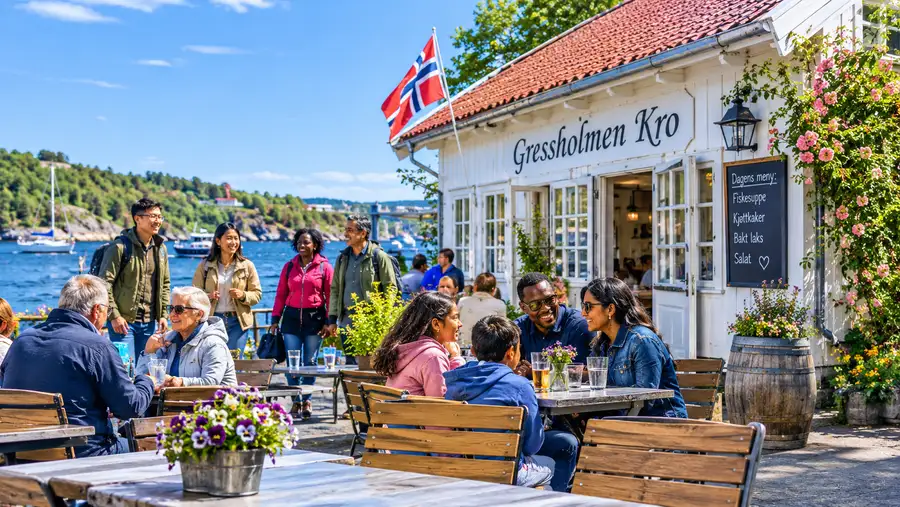
The kitchen does not try to be everything to everyone. Instead of an encyclopedic twenty-page booklet, the kitchen keeps the selection focused on fresh Nordic flavors, seasonal catches, and casual summer classics done with care. The exact dishes rotate based on what distributors bring across the water, but certain cornerstones anchor the experience every season.
Seafood is the natural star of any proper gressholmen restaurant visit. In the height of summer, cold-water shrimp served by the half-kilo with mayonnaise, lemon wedges, and thick sourdough slices are practically mandatory. It is messy work. You sit peeling shells with sticky fingers, tossing the heads into metal bowls, wiping your hands on paper napkins, and washing it all down with a crisp pilsner or a mineral-heavy Riesling.
| Category | Representative Items | Expected Price (NOK) | Best For |
|---|---|---|---|
| Cold Seafood | Pil-selv reker (peel-and-eat shrimp), lemon, mayo, sourdough | 245 - 295 | Sunny afternoons, slow grazing |
| Warm Mains | Steamed blue mussels in white wine, fish soup, smash burger | 230 - 310 | Hearty dinners, cooler fjord days |
| Vegetarian | Roasted beet salad with goat cheese, seasonal vegetable pasta | 195 - 245 | Light lunch, plant-based dining |
| Kiosk & Bakery | Fresh cinnamon buns (kanelboller), filter coffee, soft-serve | 45 - 85 | Ferry layovers, casual hikers |
| Drinks | Local Oslo microbrews, cider on tap, natural wine by glass | 98 - 155 | Terrace sipping |
Their steamed blue mussels deserve special mention. Cooked with shallots, cream, and plenty of herbs, the broth pools at the bottom of the enameled pot, practically begging to be mopped up with crusty bread. If fish is not your thing, the burger has earned a fierce local following. It is thick, properly seared, topped with tangy cheese, and served without any pretentious frills.
Casual day-trippers will appreciate the counter service side of the operation. If you do not have time for a two-hour sit-down meal, the venue functions equally well as a kafe gressholmen stop. You can queue up for cardamom buns, ice cream cones for the kids, and black filter coffee to carry down toward the rocky beaches.
Note: The kitchen usually closes an hour or two before the bar shuts down, so do not count on ordering hot mains on late evening ferries unless you arrive well before the last seating.
Book your oslo island hopping experience:
Gressholmen Kro Åpningstider and Ferry Syncing
Island life is entirely dictated by the seasons. You cannot simply walk in on a Tuesday in November expecting a warm meal. Operating hours expand and contract based on sunlight, maritime weather, and the municipal ferry timetable operated by Ruter.
During the peak season from late May through August, the inn is generally open seven days a week, often running from around 11:30 in the morning until 21:00 or 22:00 at night. In May and September, operations pull back to sunny weekends and selected Thursday-to-Sunday stretches. Winter operations are limited to occasional pop-ups, Christmas dinners (julebord), or private bookings, though the island itself remains accessible year-round.
- High summer schedule: daily service from midday to late evening, kitchen typically running until 20:00 or 21:00.
- Shoulder season (May and September): Friday through Sunday, heavily dependent on clear skies and passenger ferry frequency.
- Bad weather contingency: on days with relentless sideways rain, outdoor service collapses and the indoor seating fills fast, leading to reduced hours.
- Private events: occasional Saturday afternoons see the main dining hall booked for rustic weddings, though outdoor kiosk service usually remains accessible.
Catching the boat requires zero stress if you have the local transport app. The line B1 ferry runs from Rådhusbrygge 4 right in front of Oslo City Hall, stopping at Hovedøya, Bleikøya, and Lindøya before dropping you at Gressholmen. You do not need an expensive tourist charter ticket. A standard single public transit ticket or a 24-hour pass covers the entire journey. For full routes and seasonal frequency, check our guide to Oslo island ferries before you leave the pier.
Planning Your Island Meal: Practical Tips
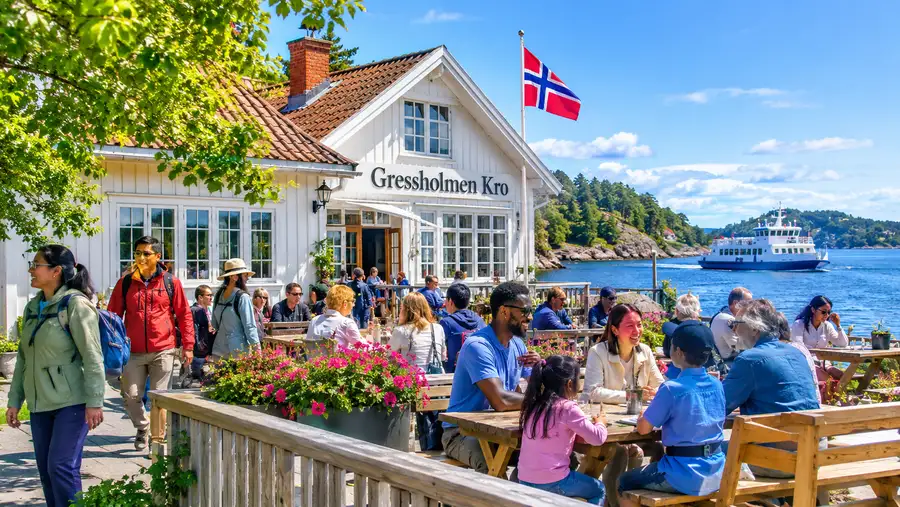
Eating out on an island requires a tiny bit more foresight than wandering into a downtown brasserie. If the restaurant is full, you cannot just cross the street to find an alternative bistro. You are on an uninhabited archipelago with exactly one commercial kitchen. Making the most of your visit comes down to smart timing and knowing how the locals do it.
Reservations are offered for indoor tables and specific evening dining slots, which I strongly advise booking if you are traveling with a party larger than four. Walk-ins are the norm for the outdoor gravel terrace. On sunny Sundays between 13:00 and 15:00, the line to order food can snake out into the grass. If you want a relaxed meal without jostling for bench space, aim for an early lunch around 11:45 or arrive after 17:30 when the beach crowds begin packing their towels to catch the boats back home.
- Payment methods: strictly cashless, so bring a credit or debit card, or have Vipps configured if you hold a Norwegian bank account.
- Dress code: anything goes, from linen dresses to damp swimming trunks under a hoodie, though shoes and shirts are required inside.
- Mosquito defense: the island's lush coastal wetlands can breed hungry mosquitoes on calm summer evenings, so bring repellent if you linger past sunset.
- Dogs are welcome: four-legged friends are a constant fixture in the outdoor beer garden, provided they stay on a leash.
My favorite routine involves catching a morning ferry with a swimsuit in my bag. Walk the five minutes across the narrow isthmus to Heggholmen, take a dip off the rocks near the historic wooden lighthouse, dry off on the warm stone, and then saunter back to the kro right when the kitchen smells begin drifting through the trees. The transition from bracing fjord water to salty steamed mussels and a cold draft beer is about as close to summer perfection as Oslo gets.
For visitors spending an entire weekend exploring the archipelago, gressholmen servering offers the most complete restaurant experience of any inner fjord island. While neighboring islands rely on simple kiosks selling waffles and packaged sodas, this place delivers a legitimate culinary afternoon that honors the harbor's maritime spirit.
Frequently Asked Questions about gressholmen kro
Do I need to book a table at gressholmen kro in advance?
For large groups or indoor dinner seatings, reservations are strongly recommended through their website. For casual drinks, kiosk snacks, or outdoor garden seating, walk-ins are standard, though you may need to hunt for an open bench during peak weekend afternoons.
Can I visit Gressholmen Kro during the winter?
Regular daily service shuts down during the cold months. However, the inn occasionally opens for traditional julebord (Christmas dinners), winter weekend pop-ups, or private events. Always verify their current schedule on social channels before taking a winter ferry across.
Is the ferry ride to the restaurant expensive?
No. The ferry is part of the standard Ruter public transportation system (Zone 1). You can use your ordinary single metro ticket, 24-hour pass, or 7-day transport card without paying any extra maritime surcharge.
Are there vegetarian and vegan options on the menu?
Yes. While the menu heavily emphasizes fresh Norwegian seafood, there is consistently at least one hot vegetarian main, alongside fresh salads, meat-free snacks, and plant-based bakery treats.
Quick Reference
- Location: Gressholmen Island, 15-min ferry from Rådhusbrygge 4
- Transit: Ruter ferry line B1 (standard Zone 1 fare)
- Vibe: Casual historic seaside tavern and beer garden
- Specialty: Peel-and-eat shrimp, blue mussels, local beer
- Payment: Cashless (cards and Vipps only)
Book your oslo island hopping experience:
Worth the Trip?
Dining out on the islands is one of those rituals that defines an Oslo summer. You could spend more money on an immaculate white-tablecloth tasting menu back in barcode district, but it will not have the smell of wild pine needles, the chatter of gulls wheeling over the water, or the sheer charm of a restored 1930 seaplane tavern. Grab a seat under the trees, order the peel-and-eat shrimp, and make sure you keep an eye on the ferry times so you do not get stranded until morning.
Read more about oslo island hopping.